Click here for printable PDF handout.
Click here for WestLaw Research (Members Only)
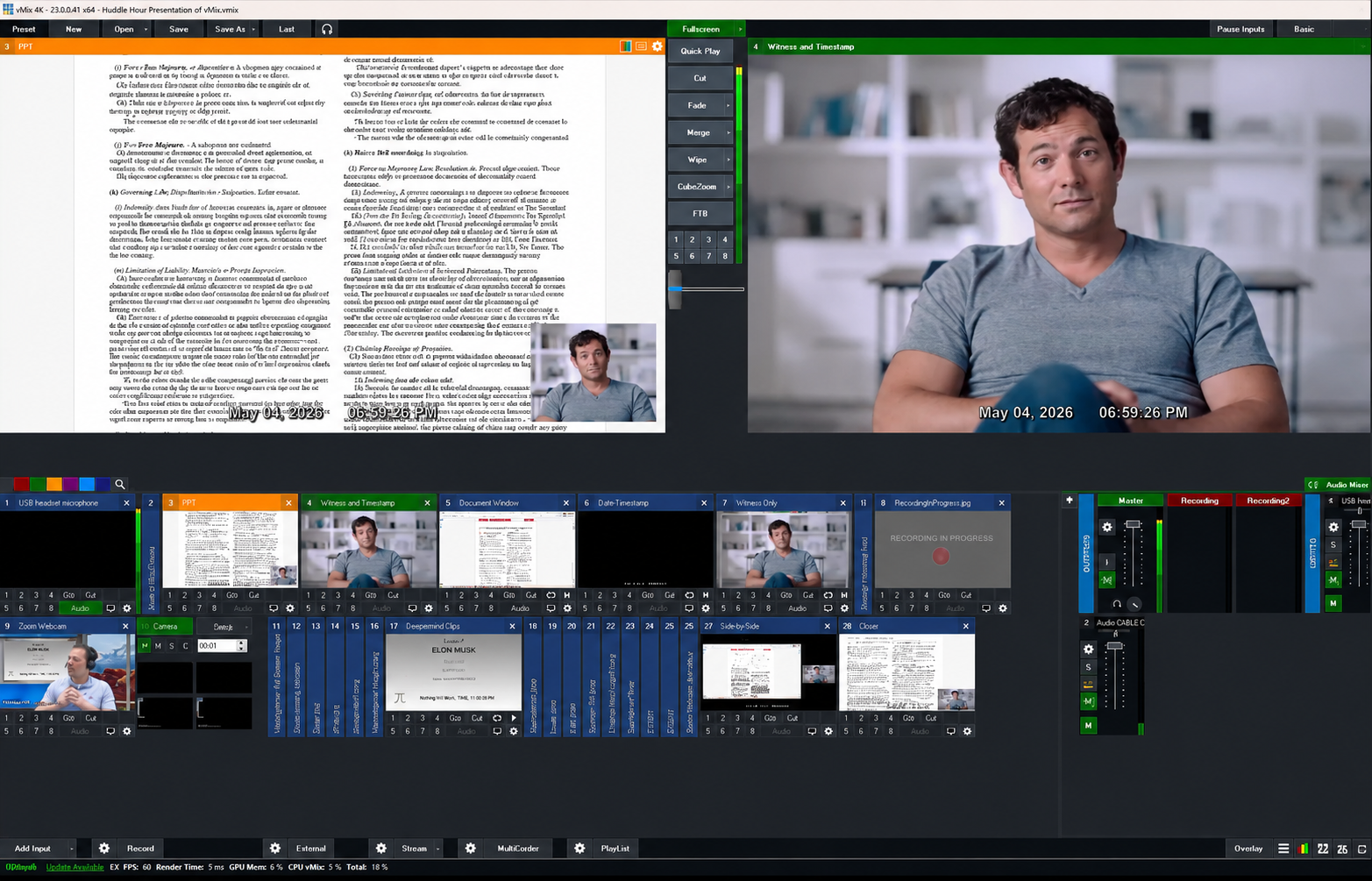
A practical guide for attorneys, law firms, and legal teams evaluating remote video recorded depositions, Zoom depositions, and legal videographer services.
As remote depositions have become routine, many attorneys ask the same question: if a deposition is already happening on Zoom, Teams, or another remote platform, can someone simply hit Record and create a usable video deposition? In many situations, that is not the safest answer. A remote video recorded deposition is not just a video meeting. It can become part of the evidentiary record, which means the way it is recorded, managed, and preserved matters.
That is why a legal videographer still plays an important role in remote depositions. A qualified legal videographer helps create a neutral, well-managed, technically reliable video recorded deposition that is more likely to hold up for impeachment, settlement presentation, preservation testimony, or trial use.
Key takeaway: Zoom can host a deposition. A legal videographer helps create the official video record. Those are not the same thing.
What Is a Remote Video Recorded Deposition?
A remote video recorded deposition is a deposition conducted through a remote platform such as Zoom or Microsoft Teams while also being captured as a formal video record. That formal record may later be used for litigation strategy, motion practice, witness preservation, or trial presentation. Because of that, the recording is not just about convenience. It is about neutrality, quality, and proper handling from the start.
Can an Attorney Just Hit Record on Zoom?
Sometimes attorneys use a platform recording for internal reference, but that is different from creating an official deposition video. Courts have repeatedly drawn a distinction between conducting a deposition by videoconference and creating a video recorded deposition suitable for evidentiary use. Under the Federal Rules of Civil Procedure, depositions generally must be conducted before a qualified officer, and attorneys are often disqualified from serving in that neutral role.
In Alcorn v. City of Chicago, the court rejected the idea that an uncertified Zoom recording could be treated the same as a properly certified deposition record. Other cases, including Sanders v. Mountain Oasis Cabin Rentals, Ryan v. eXp Realty, Adams v. Co-op City Department of Public Safety, and Raiser v. San Diego County, have likewise rejected or limited attorney-recorded Zoom videos when proper procedures were not followed.
There are jurisdiction-specific exceptions and more permissive approaches, and some courts allow personal-use recordings with notice or detailed protocols. But that is still different from creating an admissible remote video recorded deposition that can confidently be used.
Why Hire a Legal Videographer for Remote Depositions?
- Neutral handling: the recording is managed by a disinterested professional rather than counsel for one side.
- Cleaner official record: openings, appearances, oath procedures, breaks, and on/off-the-record transitions are handled consistently.
- Better technical quality: witness framing, audio, exhibit sharing, spotlighting, interruptions, and glitches are managed in real time.
- Trial-ready usability: the final deposition video is preserved in a condition designed for litigation use, not just internal review. In short, deposition video recorded by an independent legal videographer can be used as evidence.
A poor remote deposition recording can create avoidable problems. The wrong participant may be pinned or, even worse, no one is pinned at all and a gallery view is shown. Audio can drop out. The witness may be partially obscured by an exhibit or screen share. Off-the-record discussion can be captured by mistake. A file may be mislabeled, edited unintentionally, saved in the wrong format, or circulated without proper controls. Those are exactly the problems a legal videographer is there to reduce.
Best Practices for Zoom Depositions and Other Remote Depositions
- Use a qualified legal videographer when the video may matter later in the case.
- Make sure witness framing, lighting, audio, and exhibit handling are planned before testimony begins.
- Use a clear protocol for going on and off the record and for handling remote interruptions.
- Do not assume a built-in platform recording creates a court-usable video recorded deposition by itself. An independent videographer is the best way to ensure you can use your video in court.
- Hire a legal videographer who follows the ALV Remote Recording Guidelines for best practices.
When a Video Recorded Deposition May Matter Most
The difference between a casual platform recording and a properly handled remote video recorded deposition becomes most important when the recording may be used for:
- trial playback
- designation clips
- summary judgment
- settlement presentations
- impeachment
- trial presentation preservation/evidence depositions
When those outcomes are possible, it is usually safer to treat the video as part of the record-making process from the beginning, not as an afterthought.
Suggested Language for Attorneys
“A platform recording may be useful for internal reference, but it is not necessarily a certified deposition video. If the recording may ever be used in court, at trial, for impeachment, for settlement presentation, or as preserved testimony, a professional legal videographer should handle the video record.”
“The issue is not whether Zoom can record. The issue is whether the resulting video is a proper deposition record. Courts have distinguished between conducting a deposition by videoconference and creating an admissible video recorded deposition. A legal videographer helps ensure the video is made correctly from the beginning, rather than leaving the parties to fight about admissibility later.”
Bottom Line
A legal videographer is not merely pushing a button. In remote video recorded depositions, the videographer helps protect the integrity, neutrality, and usefulness of the record. A legal videographer ensures the highest quality possible for remote depositions. For attorneys searching for the safest path to a usable, admissible remote deposition video, the best practice is to retain a qualified legal videographer rather than rely on simply hitting record in Zoom/Teams/etc..
A legal videographer is often the safest path to an admissible video recorded deposition.
Further Reading
For a broader research summary on cases and rules involving remote deposition recording, see Remote Legal Videographer Westlaw Research – Available only to ALV members.
Sources and Legal References
This summary is based on federal and state case law addressing video-recorded depositions, remote deposition recordings, and attorney-made platform recordings. Key authorities include Federal Rules of Civil Procedure 28 and 30; Alcorn v. City of Chicago, 336 F.R.D. 440 (N.D. Ill. 2020); Sanders v. Mountain Oasis Cabin Rentals, Inc. (N.D. Ga. 2024); Ryan v. eXp Realty LLC (D. Ariz. 2022); Adams v. Co-op City Department of Public Safety (S.D.N.Y. 2024); Raiser v. San Diego County (S.D. Cal. 2021); and related state rules and decisions. Rules vary by jurisdiction, and attorneys should consult applicable federal, state, local, and case-specific requirements.
This resource is for general educational purposes only and is not legal advice.
Click here for printable PDF handout.
Click here for WestLaw Research (Members Only)